

Ask around right now whether AI is going to kill WordPress, and you’ll get wildly different answers depending on who you ask. Somewhere out there is a LinkedIn post you’ve probably already seen, arguing WordPress is basically dead — that nobody in their right mind would start a new site on it today when tools like Lovable, Bolt, and v0 will just build you one from a sentence. It’s a compelling claim. It’s also not the whole story.
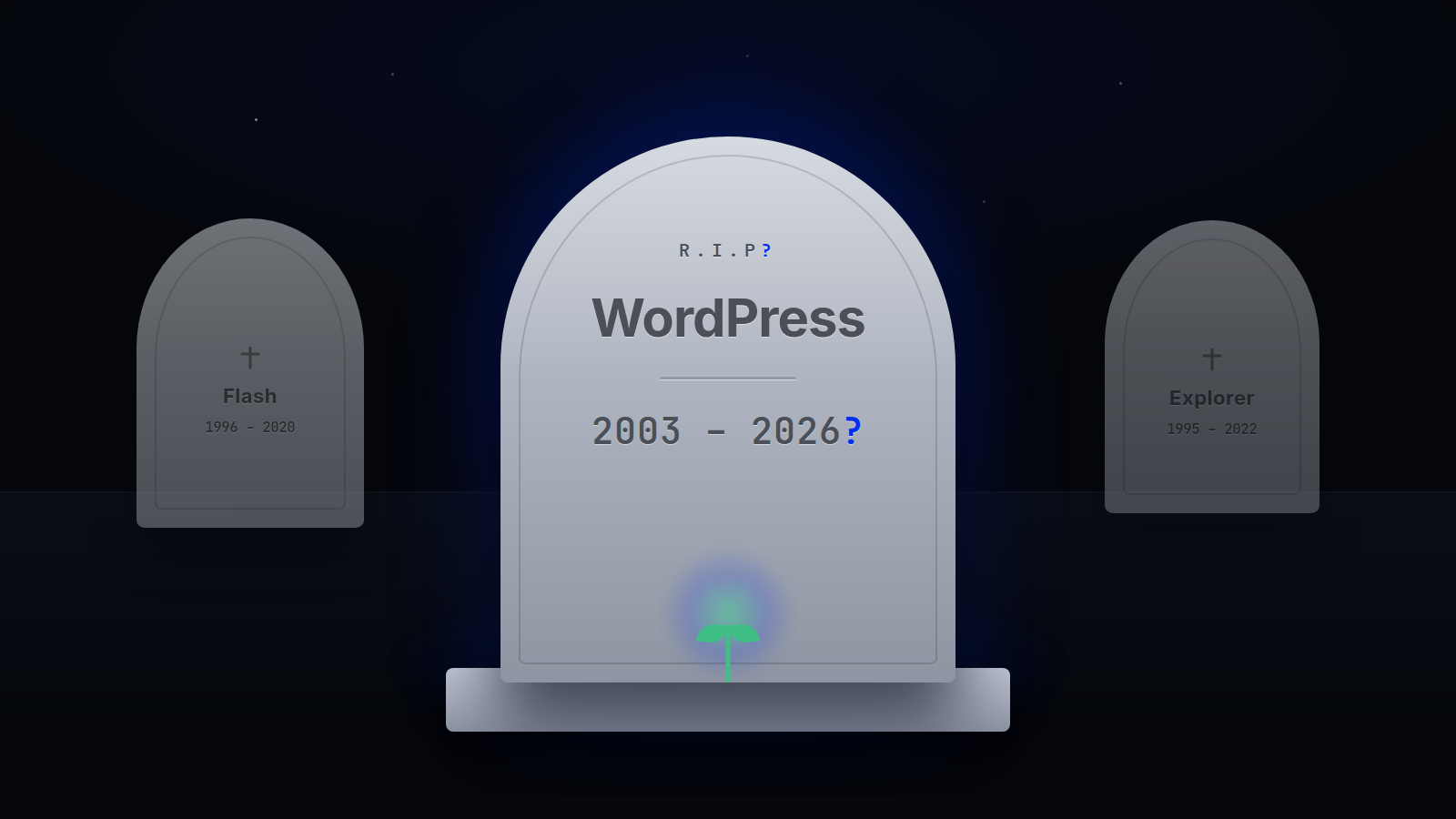
I’ve spent years writing about WordPress, and lately I’ve spent just as much time working with AI tools — including a fair bit of my own vibe-coding — so this question isn’t academic for me. My answer, if you want it up front: WordPress isn’t dying. What I think is happening is that it’s assimilating AI. Maybe slower than the loudest voices might like, but it’s assimilating it. The way I see it, AI isn’t really a competitor to WordPress — it’s closer to a utility. Like electricity, or like automation before it: something every platform plugs into, not something that replaces any one of them.
One thing to remember is that saying “WordPress survives” or “WordPress will survive” isn’t the same as “nothing changes.” There’s a real reshuffle coming, with genuinely exciting new products and incumbents nobody was watching two years ago. Even the tools I reach for — Divi AI among them — are part of that reshuffle, not outside of it.
Three Camps, One Question
Ask “is AI going to kill WordPress?” and you’ll basically get one of three answers.
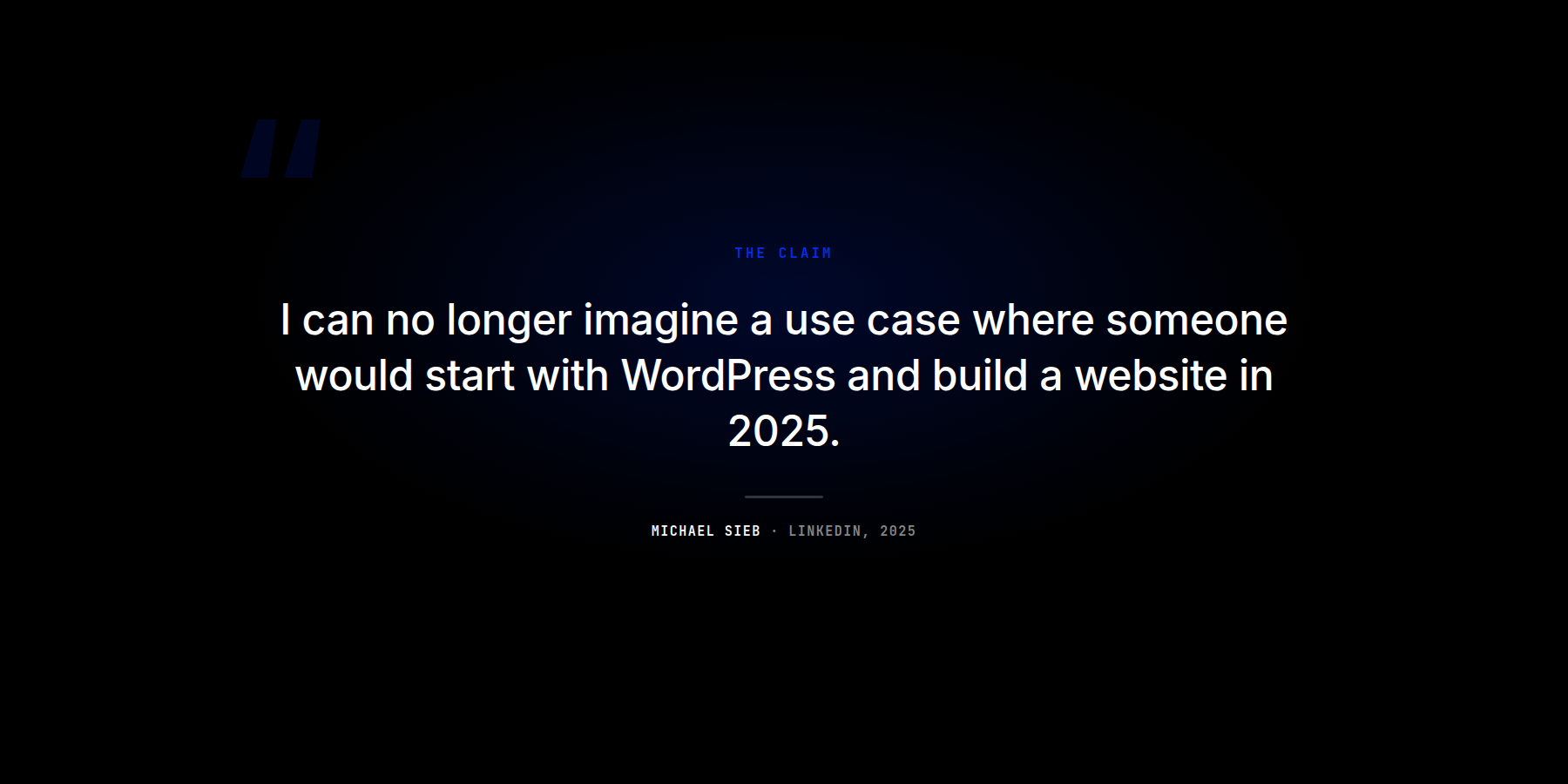
Camp one says yes, outright — why hand-build a site when you can describe one to an AI and skip WordPress entirely. Camp two says we’ve heard this before — page builders, Wix, headless, every “WordPress killer” of the last decade — and WordPress, still powering something like 41.5% of the web, has remained. And camp three says WordPress capitalizes on AI and grows from it, bending with the trend instead of breaking under it.
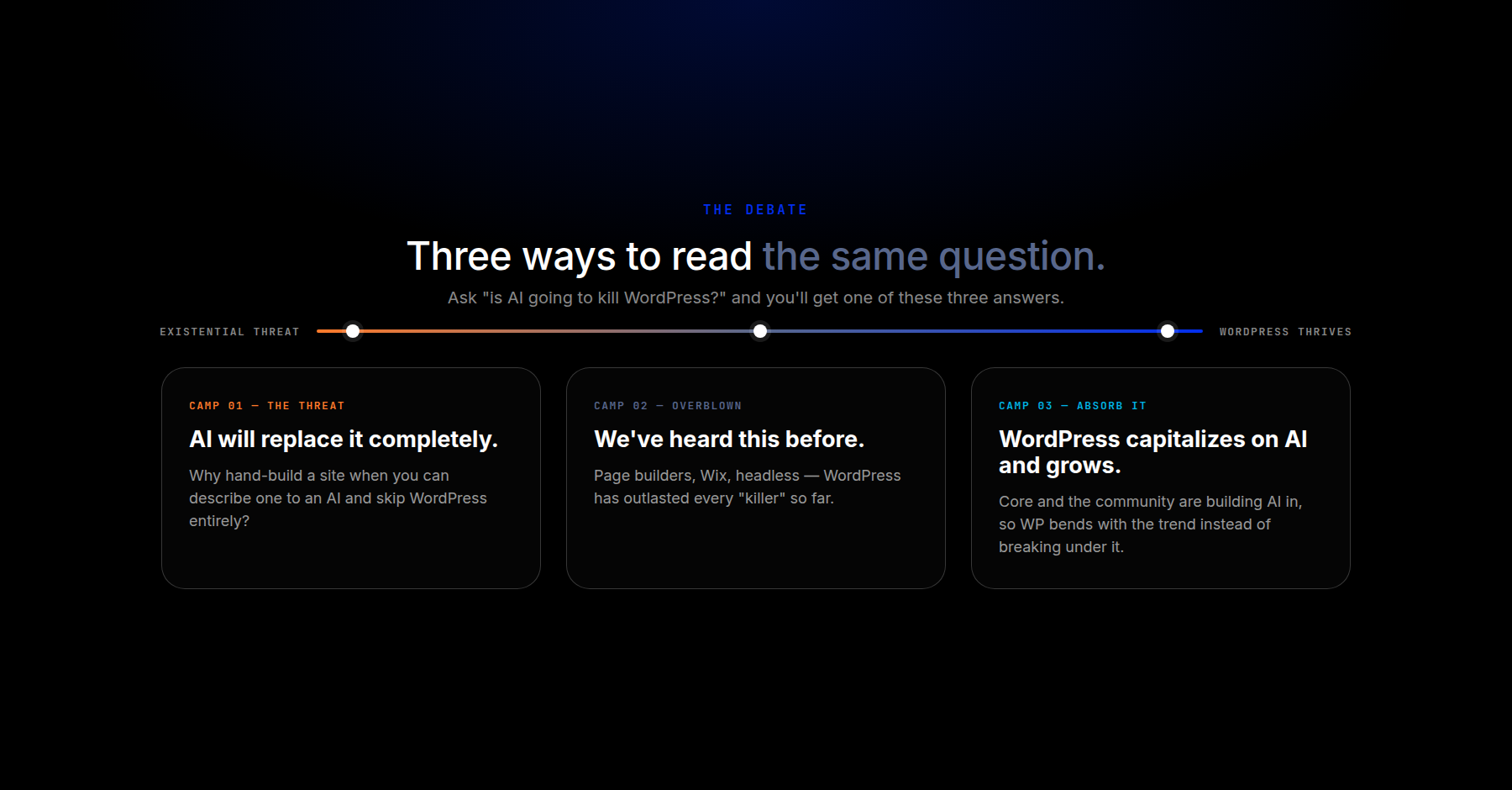
That’s the easy version of this narrative: one thing dies, another comes out on top. I don’t think it’s wrong, exactly, but I do think it’s woefully incomplete.
What Vibe-Coding Taught Me About What Actually Lasts
Here’s where I’ll admit my own bias. The excitement lately has moved hard toward vibe-coded everything — describe what you want, watch an agent build it in front of you. The first time you do this, it’s a genuinely magic feeling. I’ve built a bunch of these myself: small tools, one-off apps, a to-do app or two (we’ve all built one, right?). Some I abandoned. A couple I finished, and no one cared about. That forced an uncomfortable realization: the magic of the generation is not everything you need for something to succeed.
Once you look at the list of things that actually pair well with AI to make a success story, it becomes obvious that AI is a key piece, but not the whole foundation. Nobody really wants to reinvent the wheel, and even fewer people want to maintain the wheel they just reinvented. Vibe too hard with nothing stable underneath you, and you can vibe a project straight into the ground (I’ve done it).
Mature products — WordPress, the mass-market page builders, the go-to plugins — are stable ground precisely because they’re mature yet actively developed. We don’t need to reinvent the ground to use today’s newest tools on top of it. We get to stand on the shoulders of a giant while doing genuinely novel things with AI. That’s much less dramatic than “WP dies, and something else replaces it,” but I think it’s the truer story.
AI Inside WordPress Isn’t One Thing — It’s Many Things
Part of why the either/or framing is so contentious is that AI isn’t cropping up in one place within WordPress. It’s showing up at every layer of the stack at once: content generation, inside the core of the CMS, design and page building, and dev/maintenance work underneath it all.
AI has been a tide that has lifted all boats, especially those in the WordPress waters.
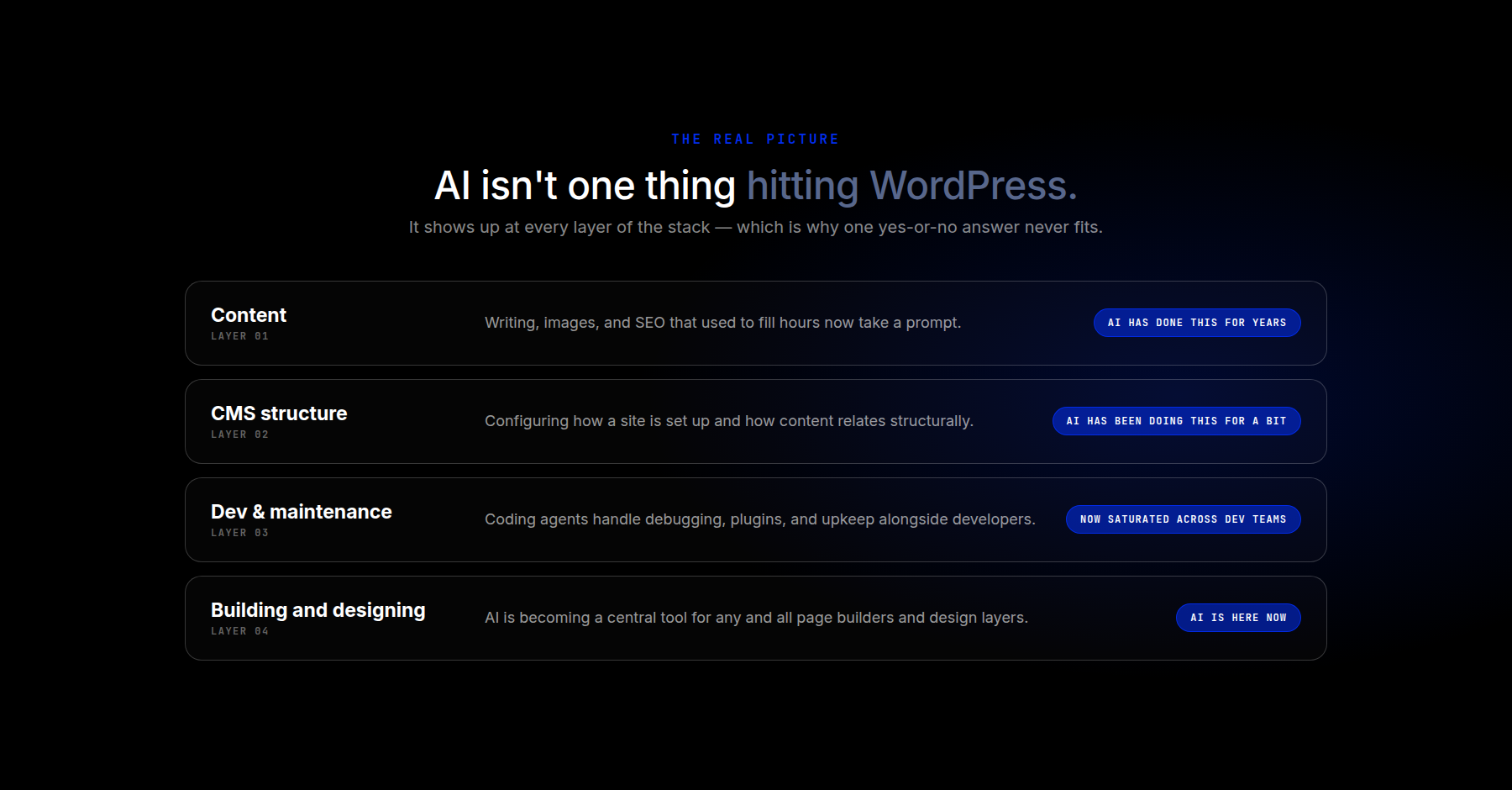
WordPress core is treating AI as infrastructure and not a bolt-on — the Abilities API lets any plugin or theme register machine-readable functionality, and an AI agent (through an API) can discover and call tools they can actually reach in and use.
This might be happening more slowly than you’d like. There might be some drama associated with it. But this is WordPress and has always been WordPress. The AI wave is just the latest example of how WordPress adapts in its unique, quirky ways to external winds.
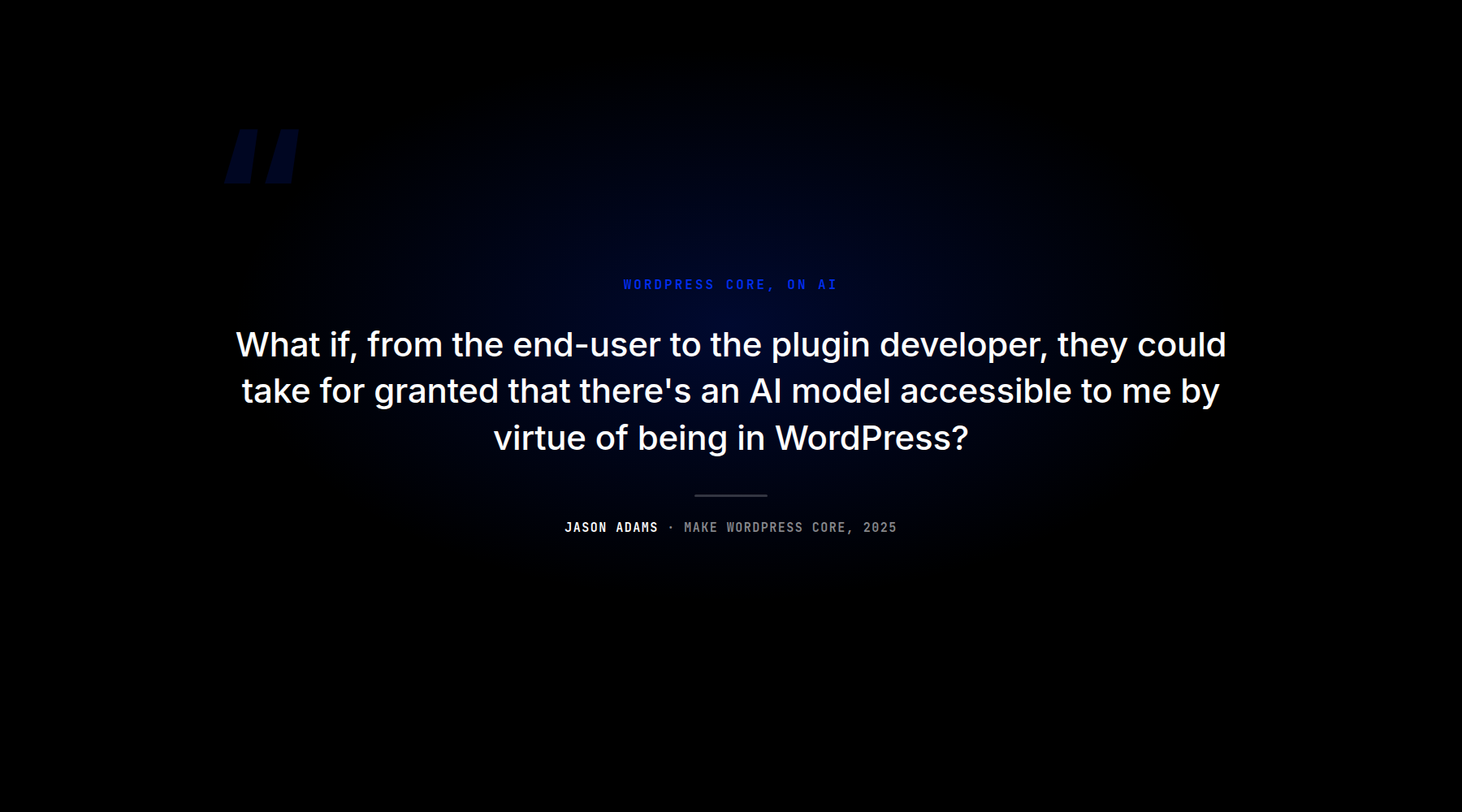
That’s the core layer, but there is more. Way more. Third-party developers are doing genuinely cool, novel things on top of it, and the major page builders are running their own AI race in parallel — Divi AI and Elementor’s Angie are bringing agentic capabilities to traditional page builders. Newcomers on the block, such as Builderius, Novamira, ZipWP, and countless others, are also making WordPress AI-fluent in their own ways.
None of this is one story. It’s several stories unfolding at the same time, each in different ways.
The Reshuffle: New Incumbents, Old Advice
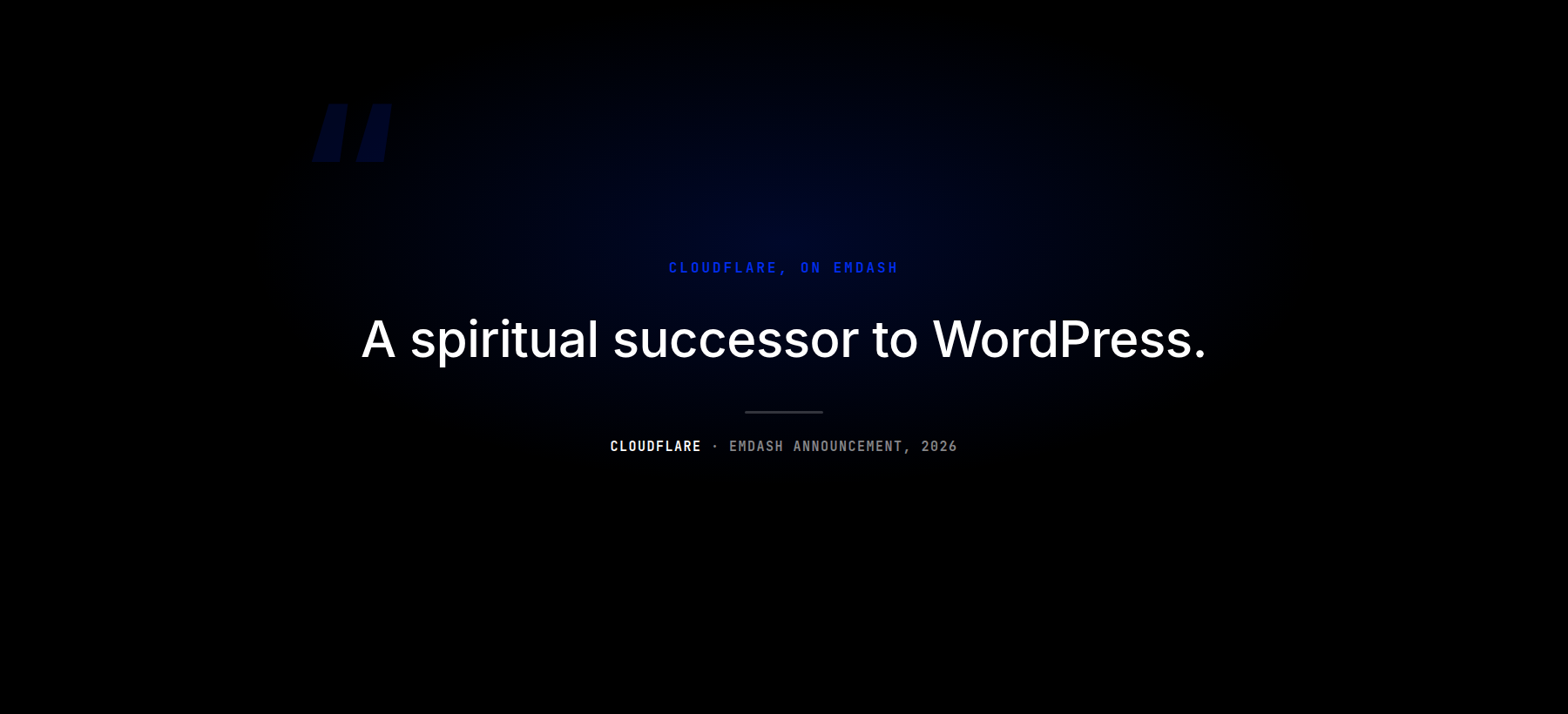
Cloudflare’s EmDash made a splash earlier this year as an “AI-native” alternative built in Astro with its own MCP server baked in — the kind of thing that gets called “the next WordPress” before anyone knows if it’ll actually have legs. I’m not going to codify EmDash here as the successor to anything; time will tell whether it specifically sticks around, no less replacing WordPress. But it won’t be the only project making that pitch — expect more Astro-based, AI-first content platforms showing up with the same story.
What’s easy to miss is that WordPress saw this coming a while ago. Matt Mullenweg’s advice to “learn AI deeply” dates back to his State of the Word address in 2022, and was reinforced again in 2023 — years before AI website builders became mainstream, probably before you were even paying for ChatGPT. He and his comments back then aren’t special on their own because people across WordPress were experimenting with AI just as early, at every layer of the project.
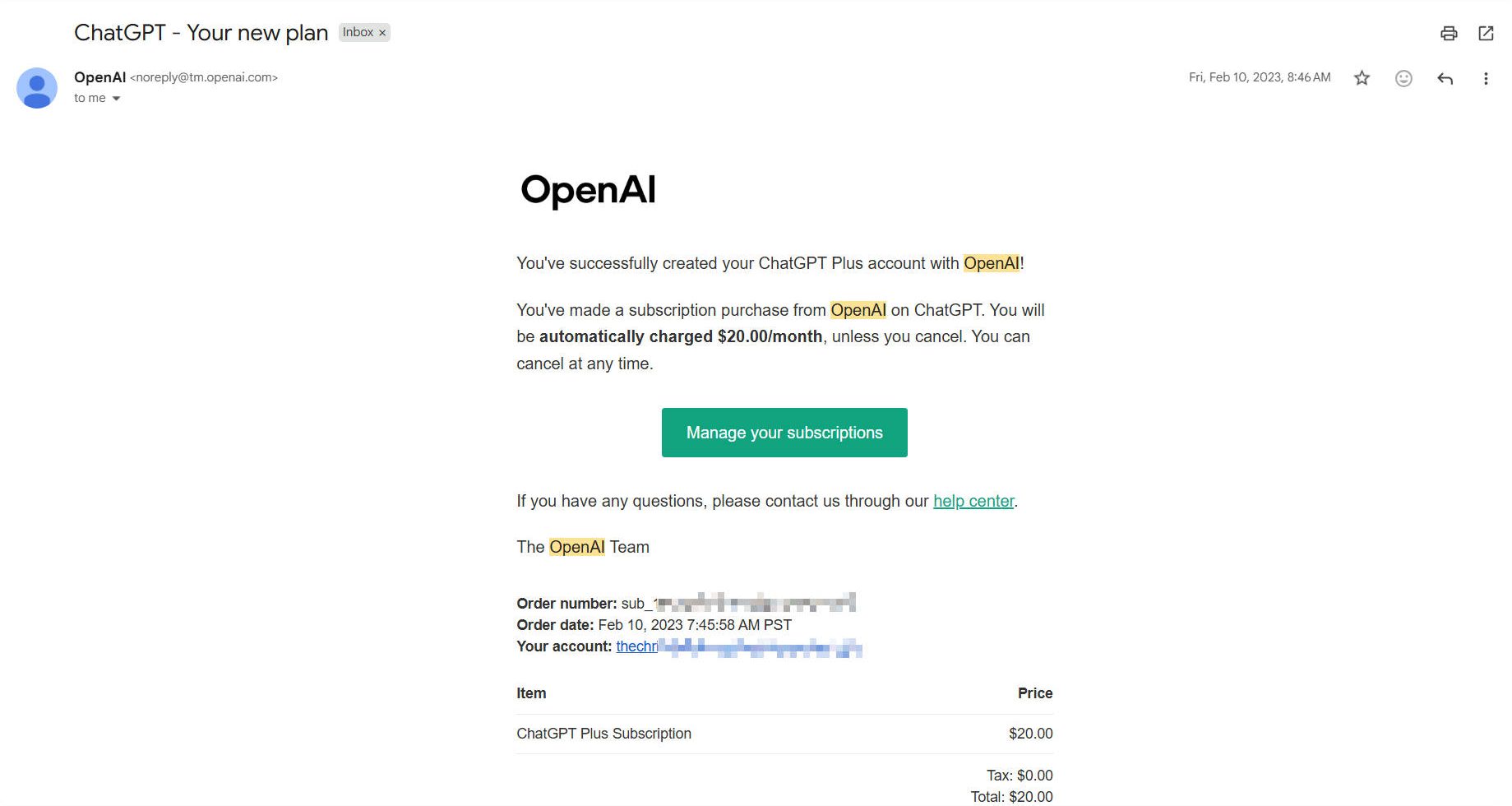
I was an early adopter of ChatGPT and was still later than many in WordPress
Whatever you think of how quickly Core has shipped AI, it’s irrefutable that thousands have been developing AI in their own lanes within WordPress for a long time now. Worth remembering next time someone frames this situation as WordPress playing catch-up.
What We Don’t Know Yet
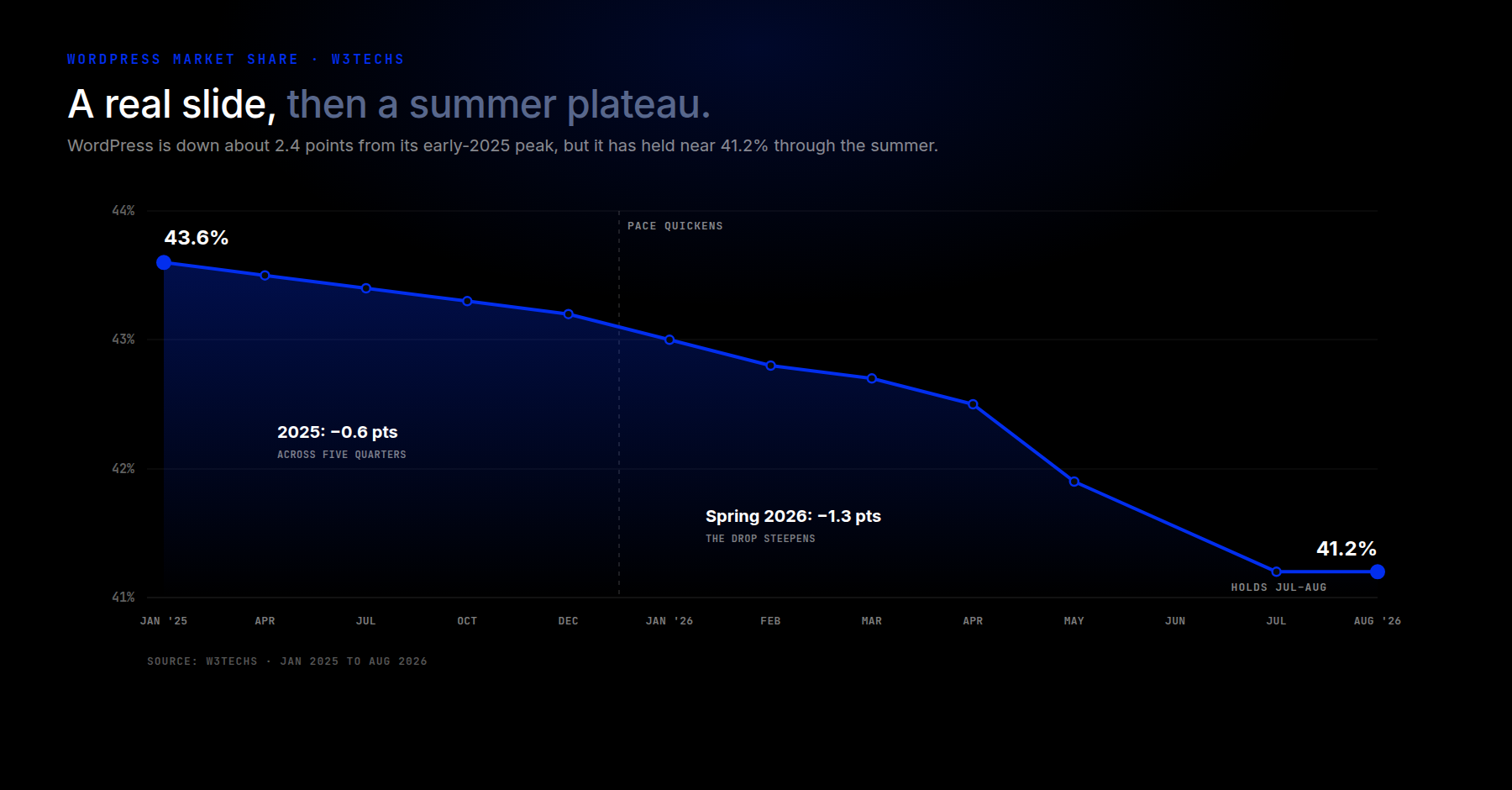
The market-share decline is a hot storyline, and it’s worth being honest about. WordPress sits around 41.2% of the web as of August 2026, down from a peak nearer 43.6% in early 2025 — a real slide of about 2.4 points. It could keep going. It could also level off, or it could partly be a measurement artifact: a wave of AI-generated static sites gets counted as “no CMS” in the tracking data, whether or not each one is actually pulling a comparable visitor away from a comparable WordPress site.
The decline is real — but it flattened over the summer, a reminder that this isn’t a straight line down and the narrative is running well ahead of the data. This is the nature of media. We want a story, and it might as well be spicy.
There’s a bigger open question underneath that one, and it’s the one I’m actually curious about: nobody’s really tracking the longevity of the businesses behind all these vibe-coded sites, not just the sites themselves. There is reason to believe that a lot of vibe-coded sites might be short-lived. I wonder about the businesses behind them, too.
Plenty of them are sitting on a free Vercel domain that costs nothing to keep alive long after the business behind it has quietly stopped mattering. A live URL isn’t the same as a living business. That part is genuinely open-ended — time will tell.
It matters most at the moment you’d actually act on it. Before you migrate a client off WordPress for something an AI spun up in an afternoon, it’s worth asking who maintains that site once the magic wears off. Every vibe-coded site is a bet that its owner wants to keep prompting forever — re-prompting it back to health every time something breaks, keeping every connected system wired together by hand. Some owners will genuinely want that. Plenty, once they realize maintenance is now their job, are going to want ground that’s maintained for them instead.
The U.S. has seen an uptick in new businesses, and economists are lauding AI as the impetus. We’ll see the long tail of all of this in time. Wouldn’t it be funny if these businesses wandered into WordPress because it offered them both AI and stability at the same time?
Or maybe not. This is the future, and nobody actually knows. Maybe AI gets so cheap that every visit generates a fresh arrangement in real time, and there’s no “website” in the sense we mean today. Who knows, it’s all speculative. That’s kind of the point.
The Story We’ll Be Telling In A Couple Years
Put it together, and here’s where I land: WordPress and AI are both too big to just cancel each other out. They’ll interface, because WordPress isn’t the sort of thing that goes away silently, and its stability — the same stability that makes it feel slow to some people right now — is exactly what lets it adapt without breaking.
The part I keep coming back to, probably because I work at Elegant Themes, is that many of the page builders that helped WordPress get this big in the first place are the same ones racing hardest on AI right now. If they run that race well, WordPress might just get something like a second life through them — not because core alone outshipped everyone, but because the entire ecosystem that made WordPress dominant the first time is doing it again. Page builders aren’t the only part of that, but they’re the ones with the most touchpoints with competing AI-native tools like Claude Design, Figma AI, and the whole lot.
That’s the story I think we’ll actually be telling in a couple of years, not “AI killed WordPress” and certainly not “nothing has changed with WordPress.”
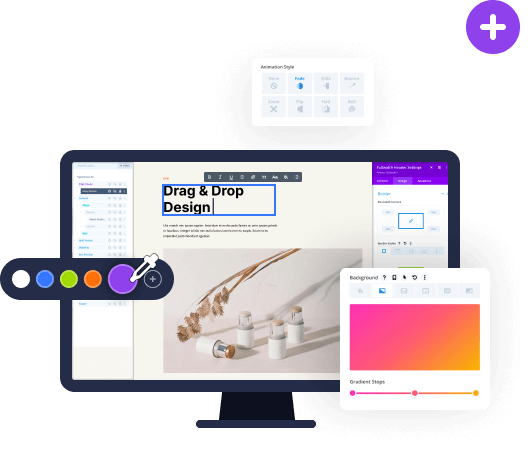
If you want to see Divi 5‘s take on this develop in real time, subscribe to the blog — we’re pouring a lot of development and testing into Divi AI Agents over the next few months, and it’s only going to get better. For those who are in the habit of testing various AI tools, grab a month of Divi AI and see what it can already do and how it changes.




I agree AI won’t kill WordPress, it’s just becoming an integrated part of it.
There’s no reason to switch to a whole new platform when WordPress is already so familiar. The way we build sites has shifted, but the foundation stays the same. You can already combine Divi or plugins like WPCode with ChatGPT to generate custom code and functions on the fly.
It’s not about AI replacing WordPress, but about changing how we build inside it. Looking forward to seeing how Divi 5 pushes this workflow even further!
Thanks for the thoughts Jukka. We’ll all see how this unfolds. I certainly see the two amplifying one another in my own work.
AI will never kill off WordPress, BUTTT what we are training AI to do is good and bad for the whole WordPress ecosystem as a whole.
“Good and bad things,” in my mind, are simply what is called “change.” We’re all riding this wave and will see where it goes, for sure.
I do not think AI will replace WordPress, but it will definitely change how websites are planned, designed and maintained. Human judgment is still needed for brand identity, user experience and business strategy. AI seems more valuable as an assistant that speeds up the process.
Great analysis, Christopher! A rare dose of common sense in a sea of threads trying to peddle panic. The point about the Abilities API is what really matters here; the rest is just noise.
And as for the crowd shouting “WordPress is dead” every week: it’s easy to proclaim the end of something when it’s the client who gets left in the lurch. Sure, it’s fine to make a living off product launches and screenshots generated by prompts—but support and maintenance are immortal. Someone is going to have to clean up the mess left behind by all the hype over new features! Production-grade reliability isn’t built on “landing page slogans.” AI within WordPress—in the hands of someone who understands technical SEO and Core Web Vitals—will always eat those “single-prompt” sites for breakfast.