Advanced Units — CSS functions and variables come to Divi 5.
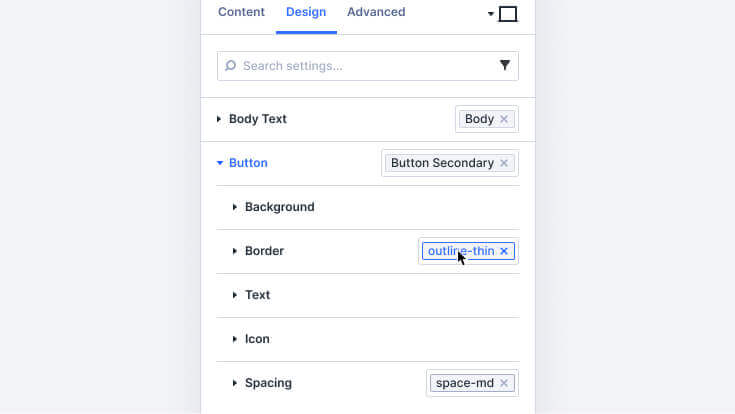
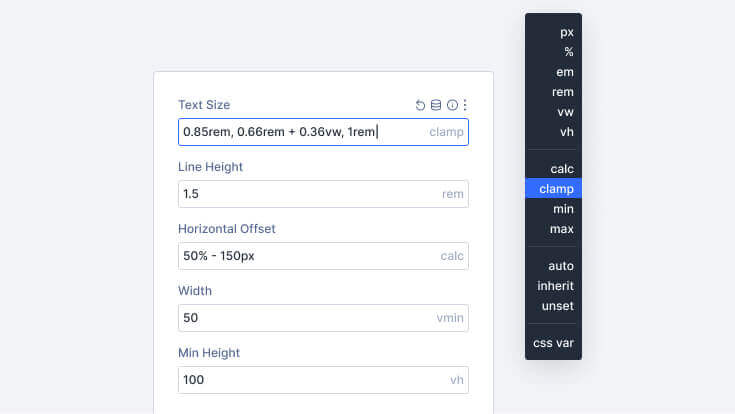
The first public glimpse of Divi 5's new foundation: native support for calc(), clamp(), var(), and the full CSS unit system inside every setting.
A monumental milestone for Divi — Divi 5 launches + over 40 feature releases including Divi AI Agents, amounting to the most important year Divi has ever seen.
Divi AI Agents are here — a new way to build on top of everything Divi 5 has introduced and made possible over the last year.
The first public glimpse of Divi 5's new foundation: native support for calc(), clamp(), var(), and the full CSS unit system inside every setting.
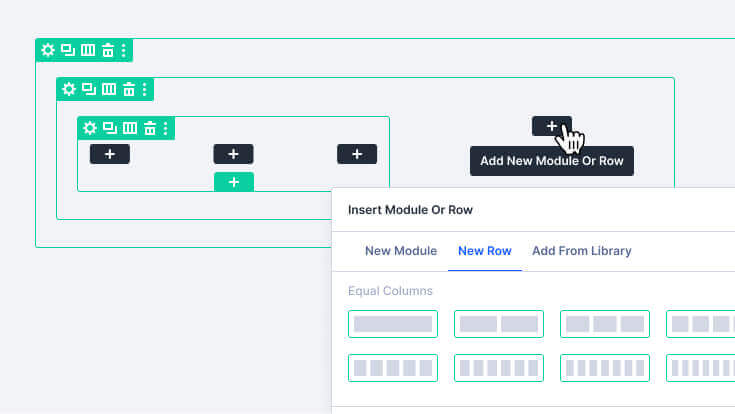
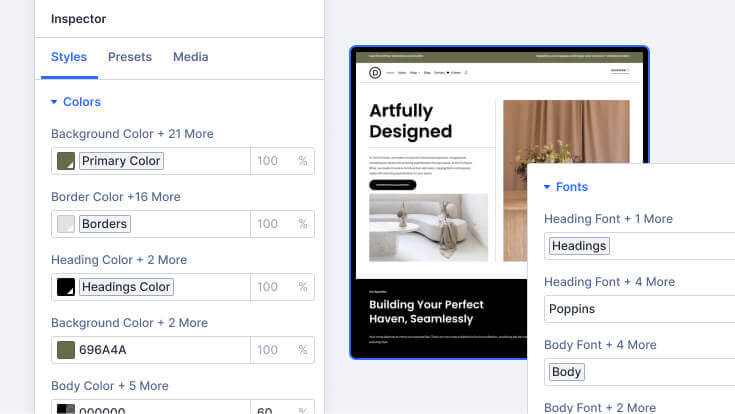
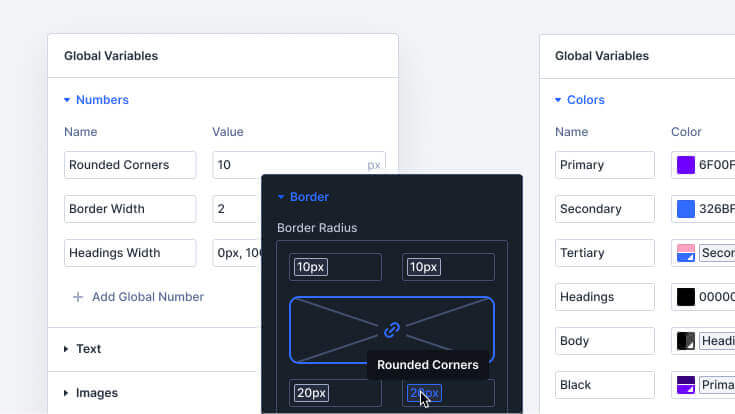
Define colors, spacing, and typography once; reuse them everywhere. Change a value in one place and watch the entire site update.

A small structural change with an outsized effect on layout. The depth limit is gone; complex layouts get simpler to build.

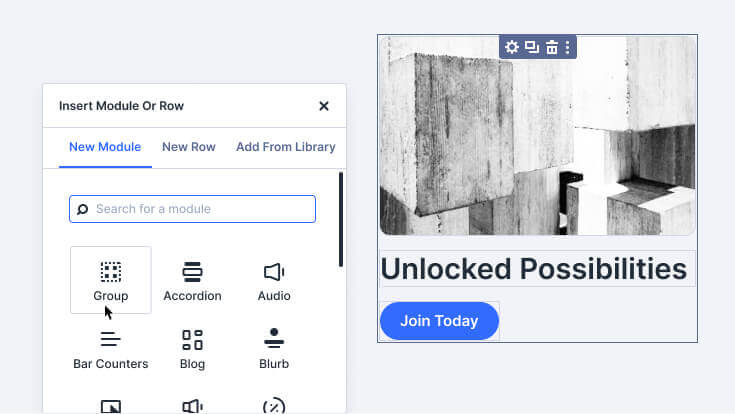
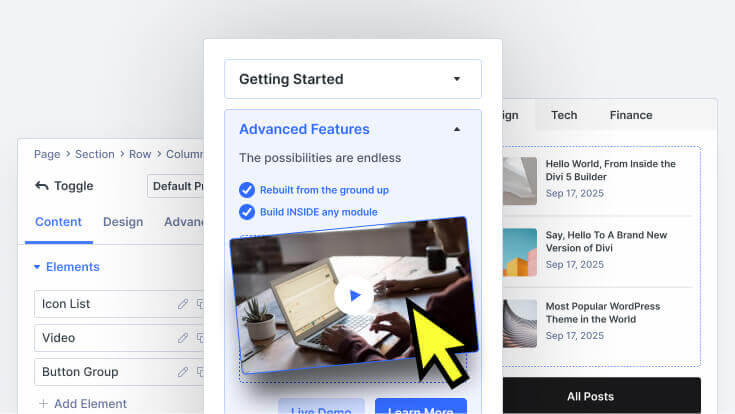
Group any combination of modules into a single component, style it once, and reuse it as a single unit across pages and sites.

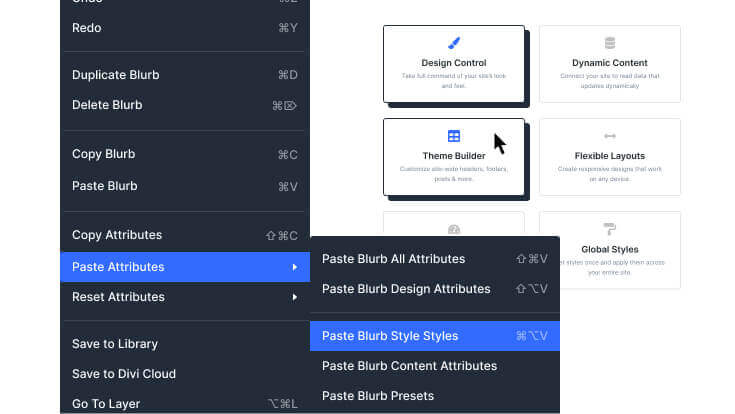
Styles, presets, and content — copied from one module and pasted onto another, at the field, group, or element level.

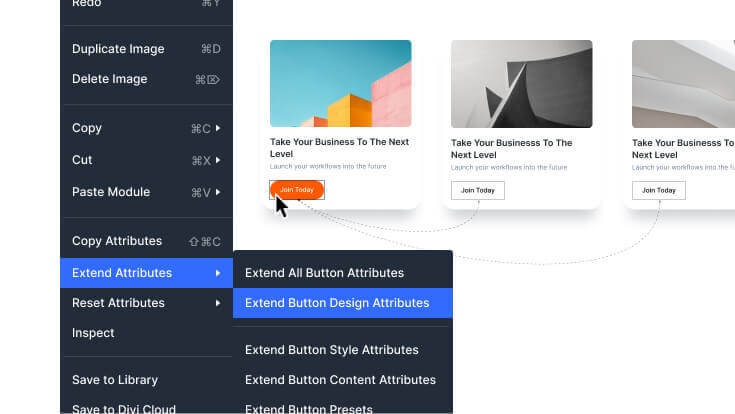
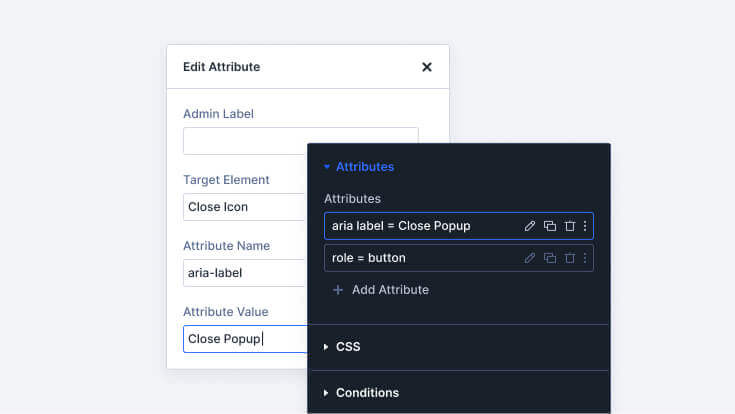
Developers can extend any module's output with custom attributes, opening Divi up to integrations that used to require custom code.

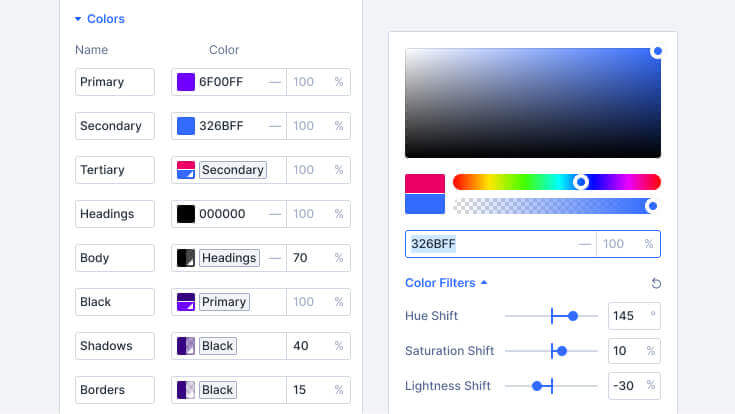
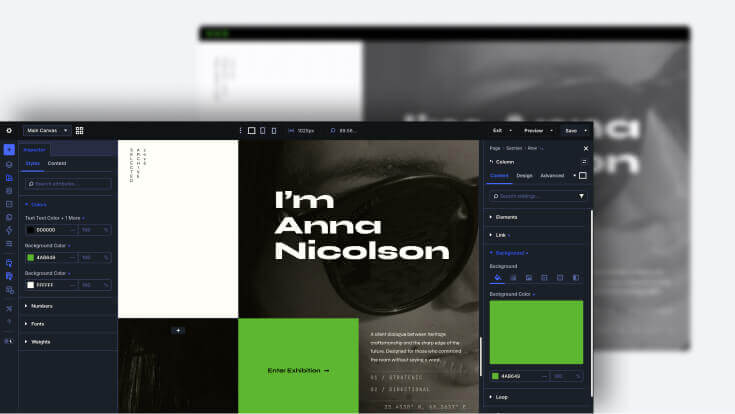
Derive shades, tints, and complements directly from your palette variables. Color systems finally feel like systems.

Every layout, child theme, and module continues to run as-is on the new engine. No migration step, no rebuild.

A unified behavior layer for the builder. Trigger anything from anything, declaratively, with no JS required.

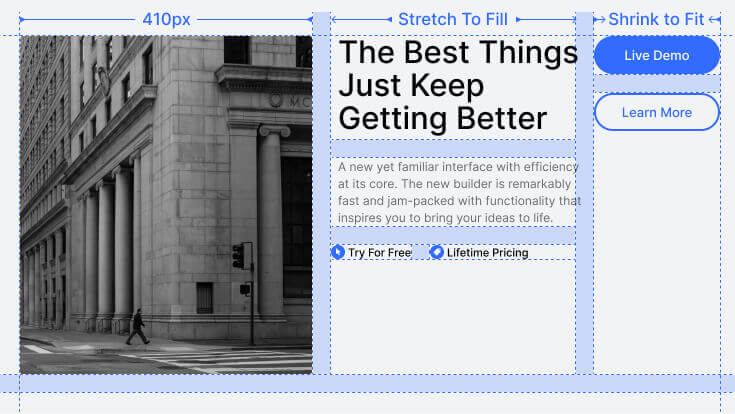
Modern flex layout with gap, alignment, wrapping, and ordering — exposed visually, designed to map cleanly onto CSS.

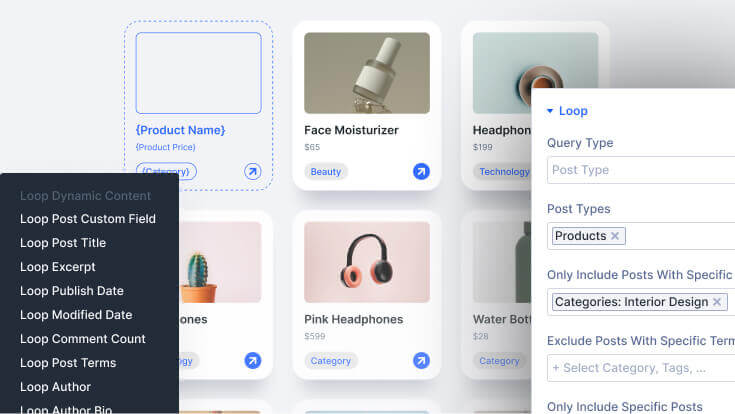
A first-party loop with filtering, sorting, pagination, and full styling control. The end of needing a third-party plugin for dynamic content.

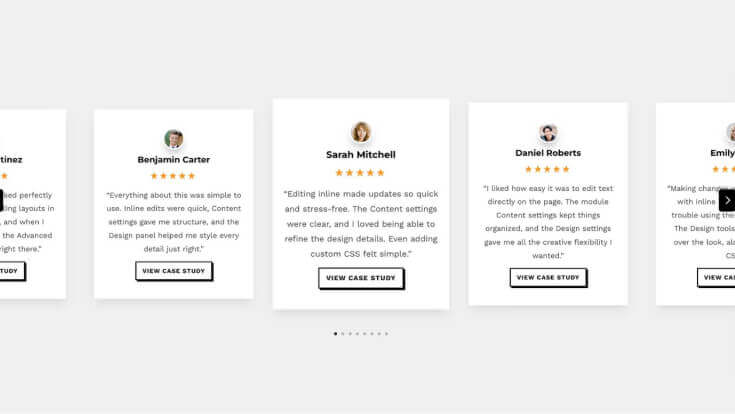
Wrap any module group in a carousel; embed Lottie animations natively. Plus a bundle of smaller module additions.

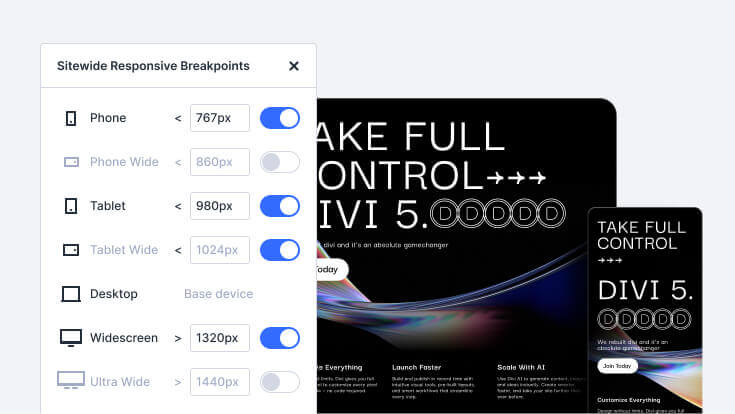
Custom breakpoints, container queries, and a side-by-side preview that lets you tune any setting at any size without leaving the canvas.

A full schema for custom HTML attributes, with autocomplete for common ARIA, data-*, and accessibility patterns.

Hover any element to see its computed styles, variable resolution, and inherited values. The end of guessing where a style came from.

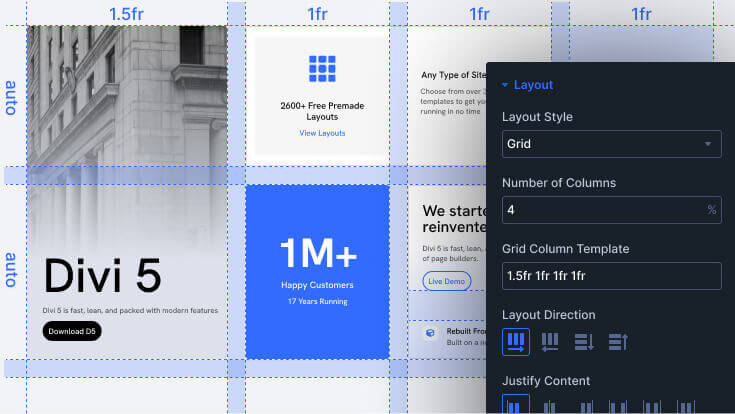
Track sizing, named areas, auto-placement, and gap. Modern grid layouts without leaving the visual builder.

Compose new module types from existing ones. A small change that opens up an entire category of design patterns.

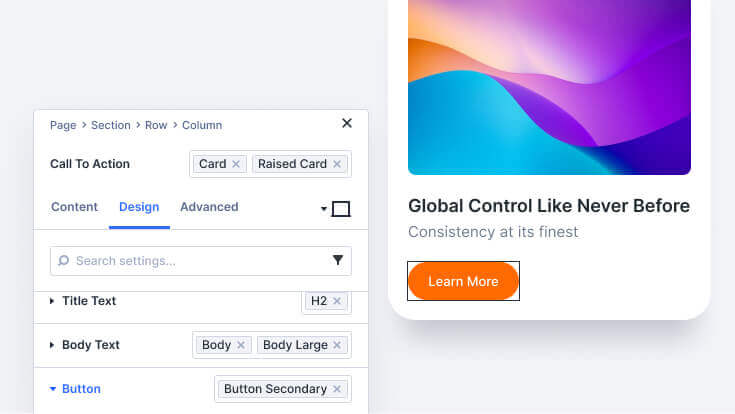
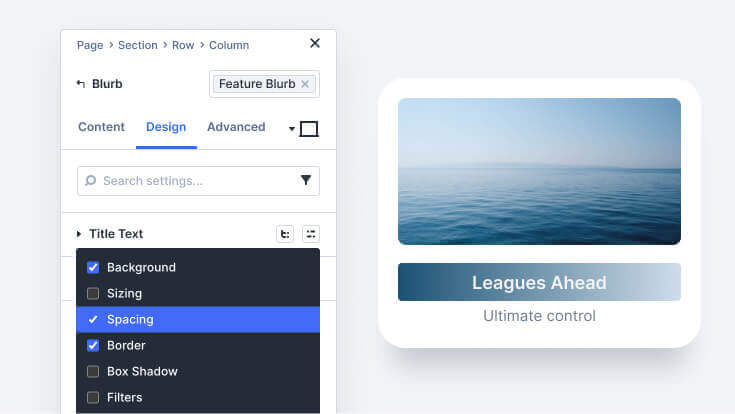
Apply multiple presets to a single module, stack their effects, and override specific values at the leaf. A design-token system, in practice.

After 23 feature drops in eight months, Divi 5 opens to every member. A new engine, native React rendering, structural blocks, and a fully backwards-compatible migration path. The rebuild becomes real.

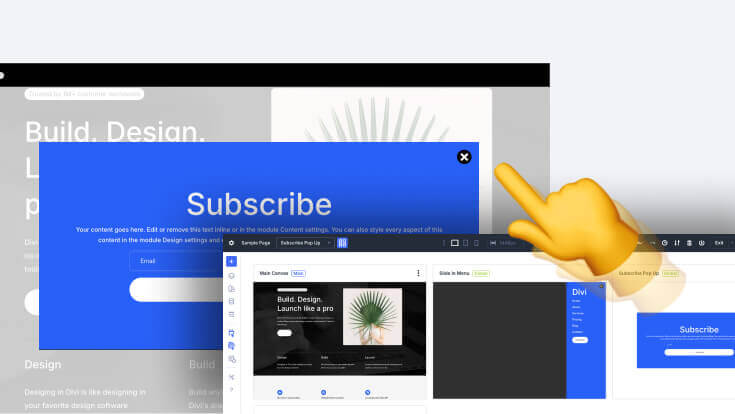
One primitive for every overlay surface in modern web design: mobile menus, modals, side panels, and portaled UI — all designed in the builder.

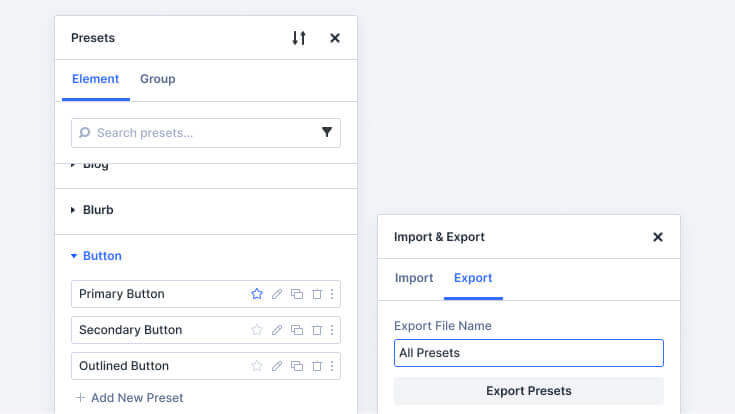
Browse every preset and variable in one panel, preview changes in context, and export the whole system to share between sites or with a team.

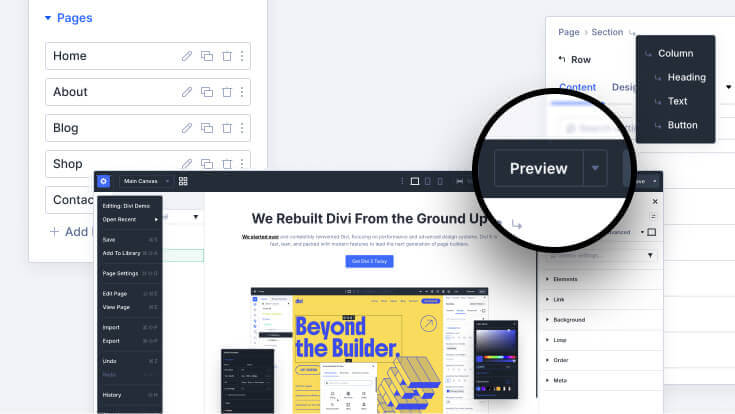
A new top-level navigator for any Divi site. Jump anywhere, preview from any viewport, and inspect content without entering edit mode.

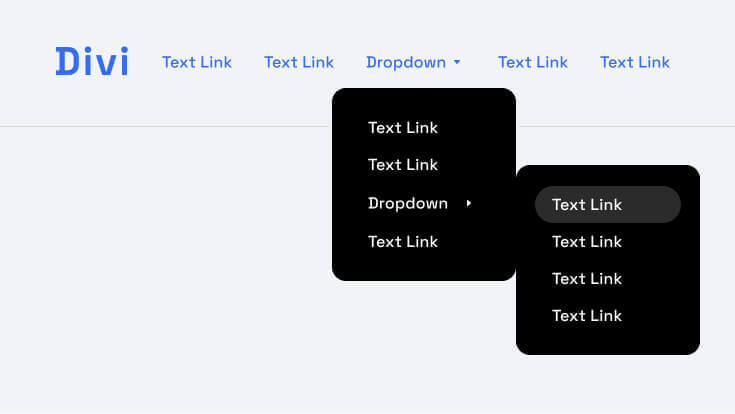
A complete rewrite of navigation. Loop a menu like any post type, attach interactions to any item, and style every state.

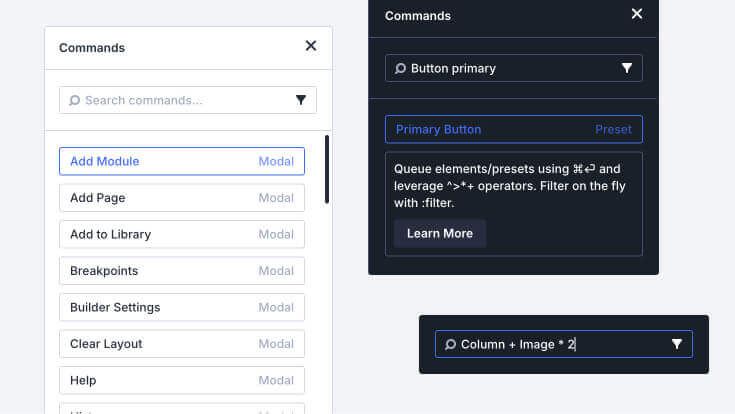
⌘K opens a single command palette to every page, setting, module, and action in Divi. The end of menu-hunting.
Three months after the public beta, Divi 5 graduates to stable. This is just the beginning of the next chapter of Divi.

Divi predicts the next navigation and prerenders it in the background. Time-to-content drops to near-zero on internal links.

A new settings architecture lets any module expose any option, any way. The result is hundreds of additions without a single new tab.

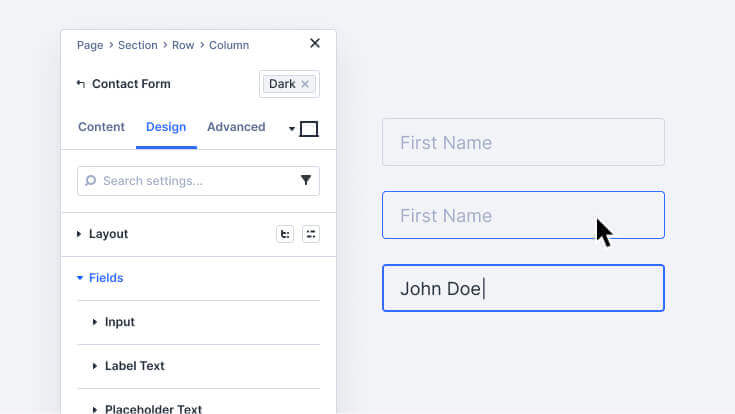
Forms get the same design-system treatment as everything else: tokenized fields, focus-state editing in the canvas, and a first-party Contact Form 7 module.

Presets that target sub-options of sub-options. The token system gets deeper, and the cascade gets explicit.

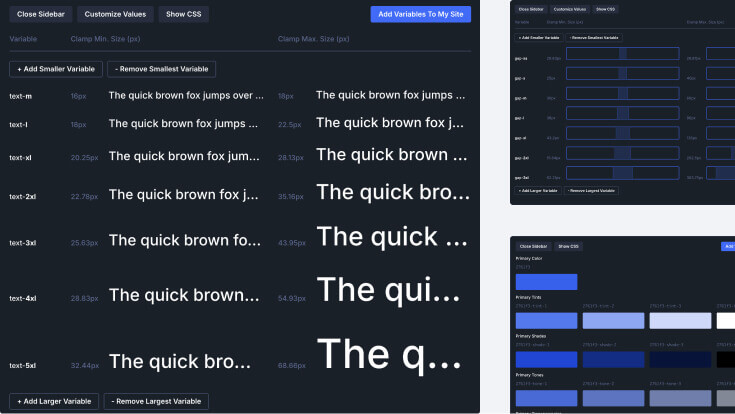
A coherent sizing scale baked into the system, plus a palette generator that produces accessible, harmonious variables from a single seed color.

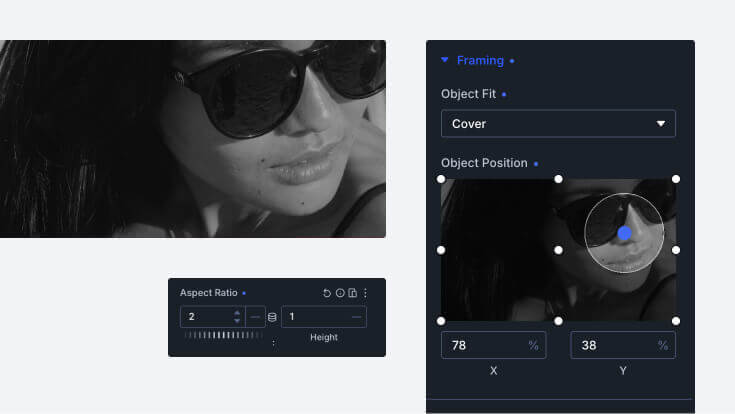
Designer-grade image handling: aspect-ratio locking, smart cropping, and reusable image presets across the entire system.

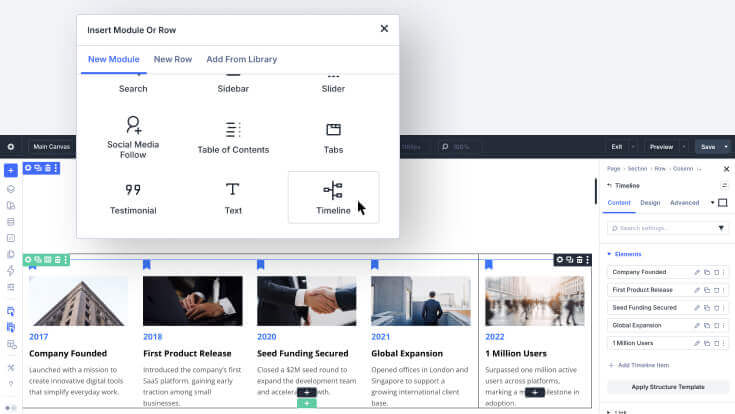
A major module drop that adds storytelling timelines, better navigation context, richer document structure, lightweight vector support, and native social feed integration.

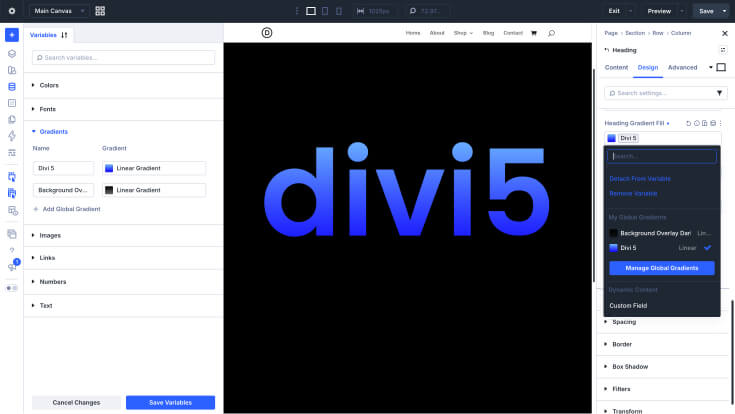
Gradients become a first-class attribute: copy, paste, extend, and reuse them as variables. Fill text with gradients or images, and add strokes without leaving the picker.

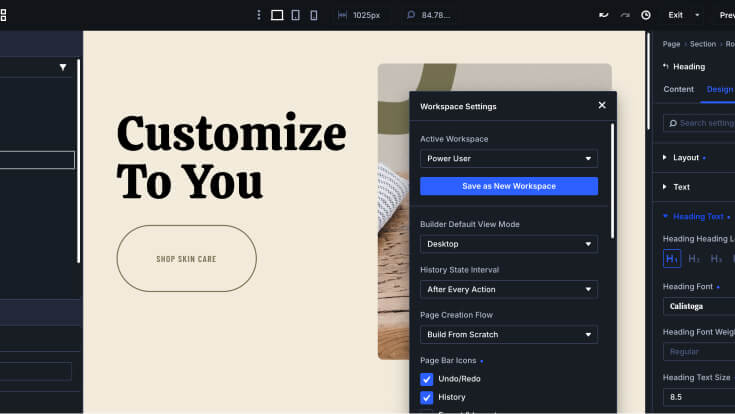
Save panel layouts, color schemes, and dock positions as named workspaces. Switch between them instantly from the sidebar or the command center.

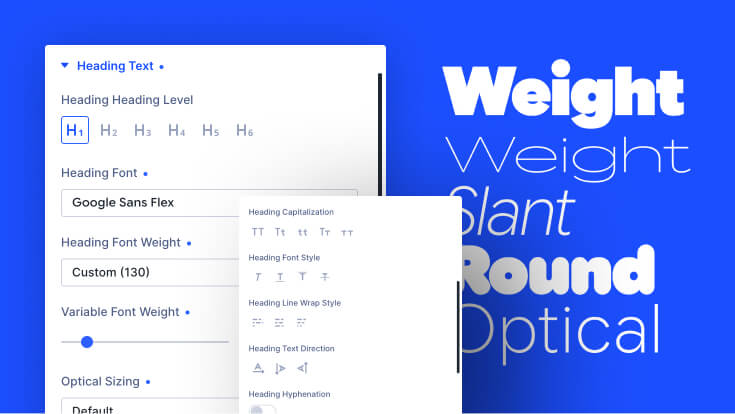
The latest Google Fonts, including variable axes, plus drop caps, text columns, hyphenation, stroke position, and magazine-style type controls across every font group.

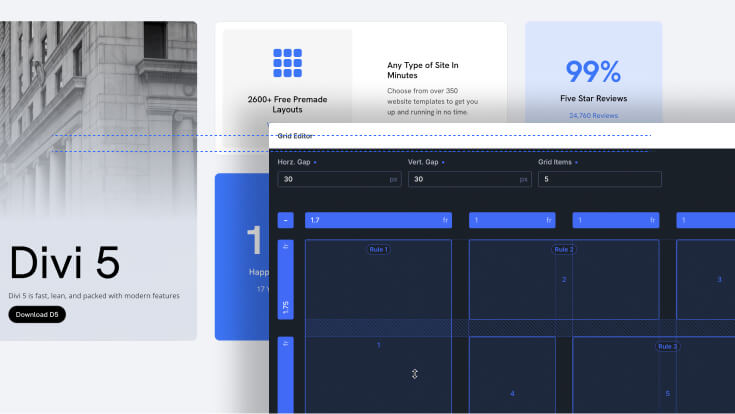
A visual editor for CSS Grid templates, gaps, and offset rules. Layouts live on the container, so loops and child items fall into place without per-item gymnastics.

Post Filter forms let visitors query loops by text, taxonomy, custom fields, and order. A new tooltip module nests inside any element, including loops.

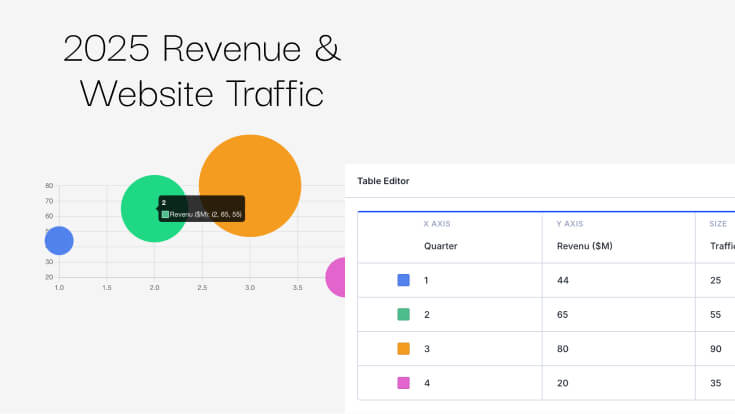
Line, area, bar, radar, pie, doughnut, polar, scatter, and bubble. Populate from a CSV or edit the data source in the builder without leaving the canvas.

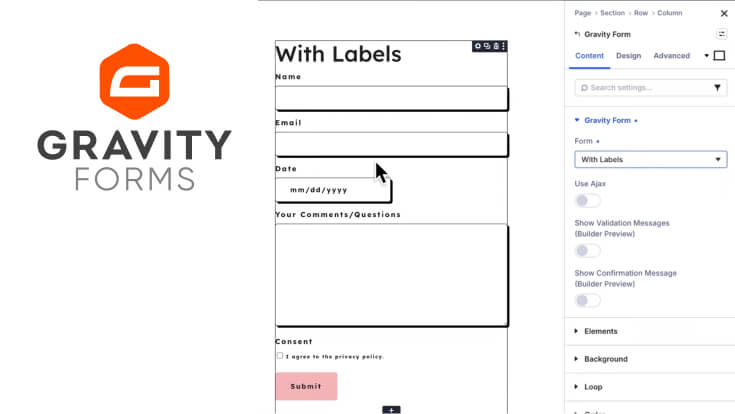
With Gravity Forms installed, drop in a native module, pick a form, and restyle it with Divi’s design settings, field presets, and pseudo-class editing.
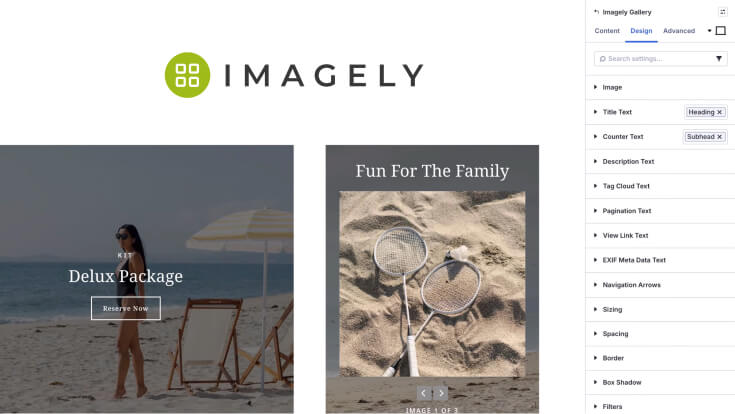
Embed Imagely galleries inside the builder and style every element with Divi presets. Sliders included — no extra gallery UI to learn.

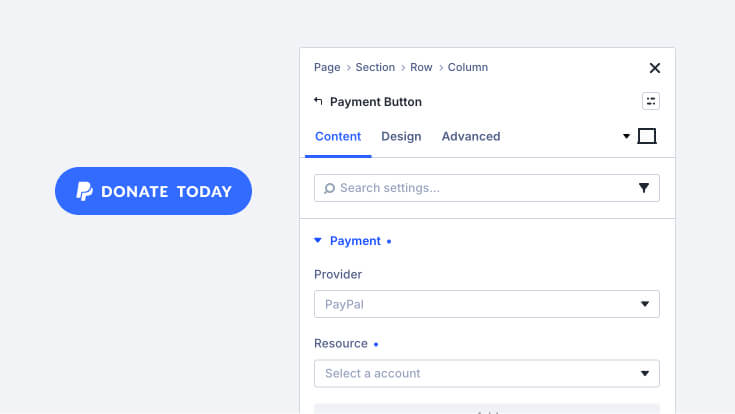
A simple button for accepting payments when you don’t need products, carts, or fulfillment. Configure PayPal or Stripe and style it like any other Divi button.

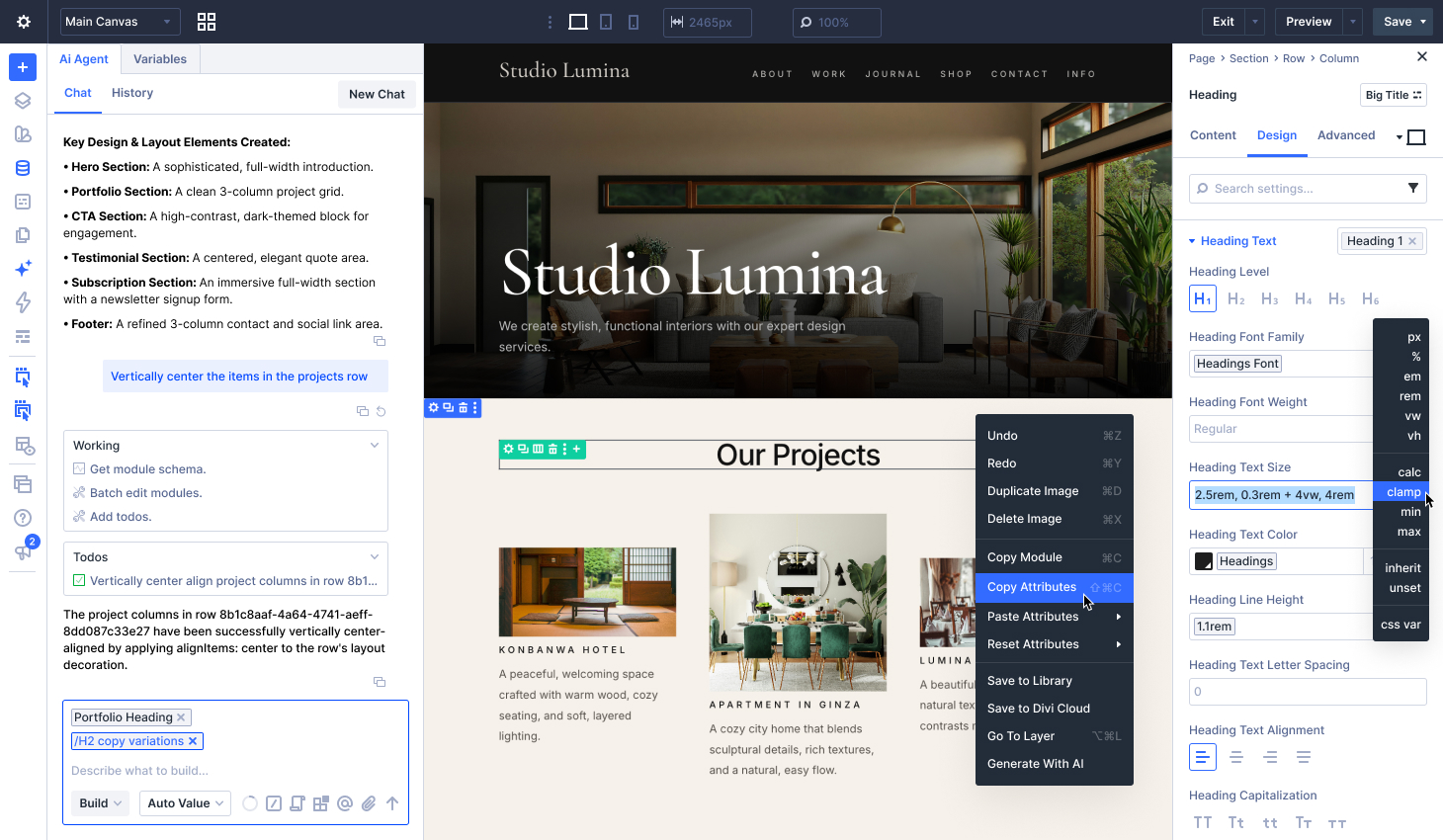
Tell Divi what you want in natural language and it designs layouts, writes code, generates images, and manages your site — inside the Visual Builder and across WordPress admin. The year of Divi 5 ends with something new.

Forget everything you thought you knew about Divi. We started from scratch to directly address every pain point and criticism, and build a foundation to propel Divi forward for the next decade.

Divi 5 is built on a new tech stack and rids itself of a decade of technical debt. It's a lean machine.
Tell Divi what you want in natural language. Layouts, code, imagery, and site management — on top of everything Divi 5 made possible.
Variables, presets, Flexbox, CSS Grid, and Loop Builder — the systems that made forty-plus releases possible.
A new engine with native React rendering. The builder feels instant, and the front end is lean.

Developers can build custom modules and integrations more easily than ever with Divi's robust new API.
Divi saves content in a block-based format, opening up new possibilities for Gutenberg cross-compatibility.
The rebuild is shipped, the foundation is new, and the year ahead is for everything we've been waiting to build on top of it.